
The Philosophy of Hospitality: Understanding the Elegant Ceremony Behind Morocco’s Most Cherished Gesture of Welcome
Moroccan mint tea is more than a fragrant infusion of green tea and fresh herbs. It is an expression of generosity, a symbol of friendship, and one of the most recognizable traditions of Moroccan hospitality.
Imagine arriving at an intimate riad in the heart of Marrakech after a journey through the city’s lively streets.
As you enter a peaceful courtyard, the gentle sound of a fountain replaces the rhythm of the medina. Your host welcomes you with a polished silver teapot, delicate glasses, and the unmistakable fragrance of freshly picked mint.
The tea is poured gracefully from above, creating a delicate layer of bubbles before the first glass is presented.
Nothing feels hurried. The moment belongs entirely to the pleasure of being welcomed.
But why does this seemingly simple gesture hold such profound meaning in Moroccan culture?
To understand Moroccan hospitality, one must first discover the traditions, craftsmanship, and quiet philosophy behind its most celebrated drink.
At Attractive Holidays, we believe the finest travel experiences reveal the soul of a destination through authentic encounters and thoughtful cultural discovery.
Few experiences express that philosophy as beautifully as sharing Moroccan mint tea.
Table of Contents
The Cultural Origins of Moroccan Mint Tea
Moroccan Mint Tea and the Philosophy of Hospitality
The Art of Preparing Traditional Moroccan Mint Tea
The Symbolism Behind the Moroccan Tea Ceremony
Moroccan Mint Tea in Luxury Travel Experiences
The Craftsmanship Behind Traditional Moroccan Teaware
Regional Tea Traditions Across Morocco
The Etiquette of Sharing Moroccan Mint Tea
The Role of Mint Tea in Moroccan Social Life
Experience Authentic Moroccan Hospitality with Attractive Holidays
The Cultural Origins of Moroccan Mint Tea
A Tradition Shaped by History and Cultural Exchange
The story of Moroccan mint tea reflects centuries of commercial exchange, cultural adaptation, and evolving social customs.
Although herbal infusions have long existed across North Africa, the widespread consumption of imported green tea in Morocco developed particularly during the nineteenth century.
Trade connections introduced Chinese green tea, including the tightly rolled variety commonly known as gunpowder tea.
Moroccan households gradually adapted these imported leaves to local tastes, combining them with fresh mint and sugar.
Over time, the preparation and serving of tea became deeply associated with hospitality, family gatherings, and social occasions.
What began as a beverage shaped by international trade developed into one of Morocco’s most distinctive cultural traditions.
Why Moroccan Tea Became a Symbol of Welcome
Hospitality occupies a central place in Moroccan social life.
Welcoming visitors with generosity, offering refreshments, and creating an atmosphere of comfort are traditions found across many Moroccan communities.
Tea became a particularly meaningful expression of this approach to receiving guests.
Its preparation requires attention, patience, and the willingness to share time with others.
The ritual communicates something that words alone cannot always express: you are welcome here.
For travelers, this simple gesture often becomes one of the most memorable aspects of visiting Morocco.
Moroccan Mint Tea and the Philosophy of Hospitality
The Beauty of Slowing Down
One of the most remarkable qualities of Moroccan mint tea culture is its relationship with time.
The ritual is not designed to be rushed.
Tea leaves are prepared, mint is added, glasses are arranged, and the drink is served with deliberate care.
The process creates a natural opportunity for conversation and connection.
Whether enjoyed during an intimate family gathering or in the elegant courtyard of a luxury riad, the ceremony encourages guests to appreciate the present moment.
This slower rhythm is part of its enduring appeal.
A Gesture of Friendship and Mutual Respect
In many Moroccan homes, offering tea is a familiar way of welcoming visitors.
Accepting a glass can communicate appreciation for the host’s generosity and willingness to share the moment.
However, customs vary between households and regions, and guests are not universally expected to drink tea regardless of their preferences.
A polite explanation is entirely appropriate when someone wishes to decline.
The essence of the tradition lies in generosity and mutual respect rather than obligation.
For international travelers, understanding this distinction makes the encounter more natural and meaningful.
Moroccan Hospitality Beyond Luxury
Some of Morocco’s most authentic hospitality experiences occur in modest surroundings.
A family home in the Atlas Mountains, a small artisan workshop, or a traditional market stall may offer the same warmth found in an elegant five-star property.
The quality of the welcome is not determined by the value of the teapot or the refinement of the setting.
It is expressed through the care taken to receive another person.
This philosophy is particularly meaningful for travelers who seek cultural authenticity alongside exceptional comfort.
The Art of Preparing Traditional Moroccan Mint Tea
The Essential Ingredients of Moroccan Mint Tea
Traditional Moroccan mint tea is generally prepared using a small selection of familiar ingredients.
The classic combination includes:
Chinese gunpowder green tea: Tightly rolled tea leaves that gradually open during brewing.
Fresh spearmint: Known locally as na’na, valued for its refreshing aroma.
Sugar: Traditionally used generously, although the quantity varies according to personal preference.
Hot water: Used to prepare the infusion and release the flavors of the tea and mint.
Some households also incorporate other aromatic herbs, depending on regional traditions and seasonal availability.
The simplicity of these ingredients allows the preparation technique to become the defining feature of the experience.
The Traditional Moroccan Tea Preparation Ritual
The preparation of Moroccan mint tea often begins with placing green tea leaves inside a metal teapot.
A small quantity of hot water may be added to rinse or awaken the leaves, depending on the method used.
Fresh mint and sugar are then introduced before the pot is filled with additional hot water.
The tea is allowed to infuse until the flavors develop.
In some traditions, the host pours a glass and returns it to the teapot to help mix the infusion.
The precise technique differs between households, and experienced hosts often develop their own preferred method.
The Elegant Art of Pouring Tea from Above
One of the most visually distinctive elements of the Moroccan tea ceremony is the elevated pour.
The host raises the teapot above the glass and allows the tea to flow in a controlled stream.
This movement can help mix the infusion and create a light layer of bubbles on the surface.
It also demonstrates the skill and confidence of the person serving.
When performed gracefully, the gesture becomes a small theatrical moment within an otherwise intimate ritual.
For visitors experiencing the ceremony for the first time, the elevated pour often leaves a lasting impression.
The Symbolism Behind the Moroccan Tea Ceremony
The Teapot as a Symbol of Generosity
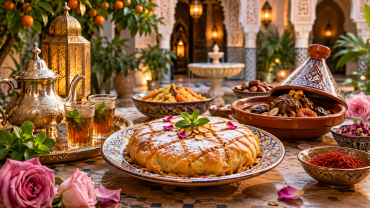
Traditional Moroccan teapots are frequently made from metal and may feature engraved or decorative details.
They are often accompanied by a serving tray and a collection of small glasses.
Together, these objects create an inviting presentation that reflects the importance of hospitality.
The act of preparing and serving tea becomes a visible expression of care.
Every detail, from the arrangement of the glasses to the attention given to each guest, contributes to the atmosphere.
The Meaning of Sharing Tea

Sharing Moroccan mint tea creates a moment of social connection.
It may mark the beginning of a conversation, welcome a visitor into a home, or accompany discussions between friends and family.
In commercial settings, tea is also frequently offered as a gesture of hospitality.
A traveler visiting a traditional carpet workshop in Fez, for example, may be invited to enjoy tea while learning about the artisan’s work.
The experience becomes more meaningful when the conversation extends beyond the objects being presented.
Tea creates a comfortable setting in which stories, knowledge, and personal experiences can be exchanged.
The Tradition of Multiple Glasses
Moroccan tea is often enjoyed over several servings.
As the infusion continues to develop, its flavor may change.
The number of glasses served and the order in which they are enjoyed depend on the host, the occasion, and local customs.
Rather than following a universal ceremonial rule, Moroccan tea culture is best understood as a collection of living traditions.
Its beauty comes from the individuality of the people who practice it.
Moroccan Mint Tea in Luxury Travel Experiences
The Private Riad Welcome in Marrakech
Imagine arriving at a beautifully restored historic riad after exploring Marrakech’s winding medina.
A peaceful courtyard opens before you, framed by traditional arches, carved cedarwood, and intricate zellige tiles.
Your host invites you to settle into a comfortable lounge while a freshly prepared pot of Moroccan mint tea is brought to the table.
The atmosphere is intimate and unhurried.
Rather than beginning your stay with formalities alone, the welcome becomes a personal introduction to Moroccan culture.
For discerning travelers, these thoughtful details can define the character of an exceptional journey.
Tea Beneath the Stars in the Agafay Desert
Few settings complement Moroccan hospitality as beautifully as the quiet landscapes of the Agafay Desert.
As the afternoon light softens across the rocky hills, a private camp provides an elegant setting for a traditional tea service.
A silver teapot rests on a carefully arranged tray, surrounded by delicate glasses and comfortable seating.
The ceremony unfolds against the natural beauty of the desert.
As evening approaches, the experience may continue with a private dinner and uninterrupted views of the surrounding landscape.
The tea itself remains simple, but the setting transforms it into a memorable expression of Moroccan hospitality.

A Mountain Welcome in the High Atlas
In the High Atlas Mountains, tea is closely associated with everyday hospitality.
Visitors may be welcomed into a mountain guesthouse or family-run lodge with freshly prepared tea.
Depending on the household and season, local herbs may complement or replace mint.
The experience offers an opportunity to discover regional customs and the relationship between hospitality and community life.
For travelers seeking meaningful cultural encounters, these moments can be more memorable than elaborate entertainment.
At Attractive Holidays, personalized journeys can be shaped around such opportunities for authentic cultural discovery.
The Craftsmanship Behind Traditional Moroccan Teaware
The Art of the Moroccan Silver Teapot
Moroccan tea culture is closely connected to the country’s decorative arts.
Traditional metal teapots may feature engraved surfaces, curved handles, and elegant spouts designed for controlled pouring.
Their forms combine practical function with ornamental beauty.
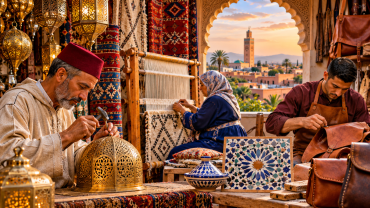
In artisan workshops, skilled metalworkers continue to produce decorative objects using techniques that require precision and experience.
The teapot therefore represents more than a serving vessel.
It also reflects Morocco’s longstanding appreciation for craftsmanship.
Handcrafted Tea Glasses and Decorative Trays
Small tea glasses are another distinctive feature of Moroccan hospitality.
Some are decorated with colorful patterns, metallic details, or geometric motifs inspired by traditional Moroccan design.
Serving trays may be made from polished or engraved metal.
Together, these elements create a refined visual composition.
For collectors and design enthusiasts, traditional Moroccan teaware offers an accessible introduction to the country’s artistic heritage.
Travelers interested in the broader cultural context can explore Morocco’s historic cities through the UNESCO World Heritage Centre.
Regional Tea Traditions Across Morocco
Marrakech and the Art of Elegant Hospitality
In Marrakech, tea is frequently offered in riads, hotels, homes, and artisan workshops.
The ceremony often forms part of the city’s celebrated approach to welcoming guests.
Historic architecture and carefully designed interiors provide beautiful settings for this familiar tradition.
Yet the meaning remains consistent across luxurious and modest environments.
Tea is an invitation to share a moment.
The Atlas Mountains and Aromatic Herbal Traditions
In mountain communities, tea preparation may reflect local preferences and the availability of aromatic plants.
Some households use herbs other than spearmint, creating distinctive regional flavors.
These variations demonstrate the adaptability of Moroccan tea culture.
For travelers, tasting different preparations offers a subtle introduction to the diversity of Morocco’s landscapes and communities.
Southern Morocco and Saharan Tea Culture
Tea also occupies an important place in the hospitality traditions of southern Morocco and Saharan communities.
Preparation methods, serving styles, and preferred sweetness may differ from those found in northern cities.
In some settings, the preparation becomes a particularly deliberate social ritual.
Guests are invited to enjoy the process as much as the finished beverage.
These regional differences enrich the experience of discovering Moroccan culture through its everyday traditions.
The Etiquette of Sharing Moroccan Mint Tea
How to Receive Tea Gracefully
When offered Moroccan mint tea, a simple expression of thanks is always appreciated.
Guests can accept the glass with courtesy and allow the host to guide the experience.
There is no need to imitate every gesture or assume that the ceremony follows strict rules.
Observing the host and showing genuine interest are usually the most respectful approaches.
If you prefer less sugar or do not wish to drink tea, communicate your preference politely.
Hospitality is ultimately about making guests feel comfortable.
Understanding the Pace of the Ceremony
Moroccan tea is often enjoyed alongside conversation.
In private homes and traditional workshops, the occasion may last longer than visitors initially expect.
This unhurried atmosphere is part of the experience.
Rather than treating tea as a quick refreshment, allow time to appreciate the setting and the people sharing it.
A few thoughtful questions about the preparation or local customs can lead to memorable conversations.
The Role of Mint Tea in Moroccan Social Life
A Tradition That Connects Generations
Moroccan mint tea remains an important feature of family gatherings, celebrations, and everyday social occasions.
Knowledge of its preparation is often learned through observation and participation.
Children grow up seeing relatives prepare tea for guests, while older family members may develop distinctive techniques over many years.
These familiar practices help maintain cultural continuity.
The ritual evolves naturally while preserving its connection to hospitality.
The Connection Between Tea and Moroccan Cultural Heritage
The significance of Moroccan mint tea becomes clearer when considered alongside the country’s broader traditions of craftsmanship, food, and social life.
Moroccan hospitality frequently brings together carefully prepared refreshments, decorative serving objects, and the pleasure of shared conversation.
These elements reflect a cultural appreciation for generosity and personal connection.
For a broader perspective on Morocco’s living traditions, explore UNESCO’s Intangible Cultural Heritage programme.
Understanding these traditions encourages travelers to appreciate Morocco beyond its celebrated monuments and landscapes.
Experience Authentic Moroccan Hospitality with Attractive Holidays
Discover Morocco Through Meaningful Cultural Encounters
The most memorable journeys are often shaped by moments that cannot be measured through conventional luxury alone.
A welcoming conversation in a mountain lodge, an afternoon spent with a skilled artisan, or a peaceful tea ceremony in a historic riad can reveal the character of a destination.
These experiences invite travelers to engage with Morocco through its people and traditions.
For guests who appreciate privacy, cultural depth, and thoughtful service, such encounters can become defining highlights of a personalized itinerary.
At Attractive Holidays, we believe luxury travel should balance exceptional comfort with genuine cultural discovery.
Conclusion: Discover the Timeless Beauty of Moroccan Mint Tea
Moroccan mint tea is one of the country’s most enduring expressions of generosity, friendship, and cultural identity.
Its beauty lies not only in the fragrance of fresh mint or the elegance of a traditional silver teapot.
It lives in the conversations, shared moments, and thoughtful gestures that accompany every serving.
From the intimate courtyards of Marrakech to the peaceful landscapes of the Atlas Mountains and the desert surroundings of Agafay, the ritual creates opportunities for meaningful connection.
For discerning travelers, experiencing this tradition offers a deeper understanding of Morocco’s celebrated hospitality.
Ready to discover the art of Moroccan hospitality through an extraordinary private journey?
Visit Attractive Holidays to explore personalized luxury travel experiences and enquire about cultural encounters designed around your interests.
Attractive Holidays — Where timeless traditions become extraordinary travel memories.

Comment (0)