
High Cuisine of the Kingdom: Unveiling the Royal Flavors of Imperial Morocco

Moroccan fine dining is an extraordinary expression of heritage, artistry, and royal hospitality. From the magnificent palaces of Fez to the intimate courtyards of Marrakech, Morocco’s culinary traditions reveal centuries of refinement, cultural exchange, and gastronomic excellence.
Rooted in the delicate balance of sweet and savory flavors, royal Moroccan cuisine celebrates exceptional ingredients, ancestral techniques, and sophisticated presentation. Fragrant saffron from Taliouine, pure orange blossom water, aromatic Damask roses, and precious argan oil contribute to a culinary identity unlike any other.
Today, Morocco’s gastronomic heritage is experiencing a remarkable renaissance. Acclaimed chefs are reinterpreting traditional recipes, transforming time-honored specialties into contemporary culinary experiences that appeal to the world’s most discerning travelers.
Whether enjoyed beneath the carved cedar ceilings of a historic riad, within a magnificent palace courtyard, or during an intimate dinner prepared by a private chef, Moroccan gastronomy offers a journey through the soul of the Kingdom.
For guests of Attractive Holidays, discovering these exceptional flavors can become an unforgettable element of a bespoke luxury journey.
Table of Contents
-
The Royal Heritage of Moroccan Fine Dining
-
Seven Exquisite Secrets of Royal Moroccan Cuisine
-
The Art of Moroccan Hospitality
-
Marrakech: The Capital of Contemporary Moroccan Gastronomy
-
Exclusive Private Dining Experiences in Morocco
-
The Future of Moroccan Haute Cuisine
-
Discover Moroccan Fine Dining with Attractive Holidays
-
Frequently Asked Questions
1. The Royal Heritage of Moroccan Fine Dining
The story of Moroccan fine dining begins within the historic imperial cities of Fez, Marrakech, Meknes, and Rabat.
For centuries, these remarkable destinations served as political, cultural, and artistic centers, where royal households cultivated elaborate culinary traditions.
Moroccan cuisine evolved through a fascinating combination of Amazigh, Arab, Andalusian, Mediterranean, and African influences. Each civilization contributed ingredients, cooking methods, and culinary customs that gradually formed the sophisticated gastronomy celebrated today.
Within royal kitchens, preparing a meal was considered an art requiring exceptional precision.
Chefs carefully balanced spices, selected seasonal ingredients, and developed elaborate recipes designed to honor distinguished guests.
The result was a culinary tradition characterized by elegance, generosity, and remarkable attention to detail.
Fez: The Cradle of Royal Moroccan Cuisine
Fez holds a distinguished position in Morocco’s gastronomic heritage.
Its traditional cuisine is particularly celebrated for its intricate combinations of sweetness, spice, and delicate aromatic ingredients.
Recipes passed down through generations preserve techniques associated with ceremonial meals and aristocratic hospitality.
Beyond its culinary reputation, the historic Medina of Fez, recognized by UNESCO, offers an extraordinary setting for exploring the country’s cultural heritage.
Marrakech: Where Heritage Meets Contemporary Luxury
Marrakech represents a different yet equally captivating expression of Moroccan gastronomy.
Its vibrant souks, traditional spice markets, historic palaces, and contemporary restaurants create an exceptional environment for culinary discovery.
Today, the Red City has become a destination where ancestral recipes coexist with innovative fine dining concepts.
For luxury travelers, this combination offers an opportunity to experience Morocco’s culinary past and present within a single extraordinary journey.
2. Seven Exquisite Secrets of Royal Moroccan Cuisine
The sophistication of Moroccan royal cuisine is revealed through its ingredients, techniques, and deeply rooted traditions.
Each element contributes to a culinary experience that extends far beyond the dining table.
Secret 1: The Golden Elegance of Taliouine Saffron

Among the most treasured ingredients in Moroccan gastronomy, saffron occupies a particularly prestigious position.
Cultivated in the Taliouine region, this delicate spice is valued for its golden color, distinctive aroma, and remarkable culinary versatility.
Its subtle complexity enhances traditional tagines, refined rice preparations, and ceremonial dishes.
In Moroccan fine dining, saffron is used with precision, allowing its fragrance to complement rather than overpower the natural flavors of other ingredients.
Its presence reflects the importance of craftsmanship and regional authenticity within Morocco’s culinary heritage.
Secret 2: The Delicate Fragrance of Orange Blossom Water
Orange blossom water represents one of the most recognizable aromas of traditional Moroccan cuisine.
Its floral elegance appears in delicate pastries, fragrant desserts, and selected savory preparations.
Historically associated with hospitality and celebration, this ingredient introduces a subtle sensory dimension to Moroccan dining.
In contemporary gastronomy, chefs use orange blossom water to create refined desserts, aromatic creams, and sophisticated interpretations of traditional sweets.
Secret 3: The Royal Art of Moroccan Pastilla

Few dishes embody the refinement of royal Moroccan cuisine more beautifully than pastilla.
This celebrated specialty combines delicate layers of thin pastry with a richly seasoned filling traditionally prepared using pigeon or poultry, almonds, and aromatic spices.
The contrast between crisp pastry, tender meat, and subtle sweetness creates an exceptional harmony of textures and flavors.
Pastilla has long been associated with formal celebrations and important gatherings.
Its preparation requires patience, technical skill, and a sophisticated understanding of flavor balance.
Today, contemporary chefs reinterpret this historic delicacy through elegant individual portions, creative presentations, and carefully selected ingredients.
For visitors discovering Moroccan fine dining for the first time, pastilla offers a memorable introduction to the Kingdom’s culinary artistry.
Secret 4: The Precious Flavors of Moroccan Argan Oil
Culinary argan oil is one of Morocco’s most distinctive regional products.
Produced from the kernels of the argan tree, this prized oil offers a rich, nutty flavor that complements a variety of traditional preparations.
It is particularly associated with southwestern Morocco, where argan trees form an important part of the natural and cultural landscape.
In refined cuisine, carefully selected culinary argan oil can enhance vegetables, sauces, and contemporary dishes.
Its distinctive character demonstrates how Moroccan gastronomy transforms regional ingredients into sophisticated culinary experiences.
Secret 5: The Floral Heritage of the Valley of Roses
In Kelaat M’Gouna and the surrounding Valley of Roses, fragrant Damask roses are an important part of local heritage.
Their delicate fragrance inspires aromatic waters, traditional preparations, and contemporary culinary creations.
Rose-infused desserts and carefully balanced floral accents offer an elegant interpretation of Morocco’s natural richness.
For travelers seeking authentic cultural encounters, discovering regional ingredients and their origins adds another dimension to the gastronomic experience.
Secret 6: The Sophisticated Balance of Sweet and Savory
One of the defining characteristics of royal Moroccan cuisine is its extraordinary ability to combine contrasting flavors.
Traditional dishes frequently bring together tender meats, dried fruits, aromatic spices, and delicate sweetness.
Lamb with prunes and almonds is a celebrated example of this culinary philosophy.
Slow cooking allows the ingredients to develop a rich depth of flavor, while the sweetness of the fruit balances the savory complexity of the meat.
This harmony remains central to Moroccan fine dining and continues to inspire contemporary chefs.
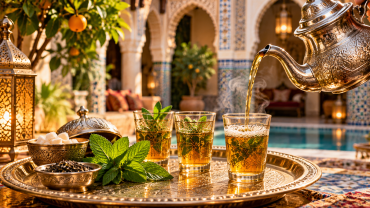
Secret 7: The Timeless Ritual of Moroccan Mint Tea

No exploration of Moroccan gastronomy would be complete without the traditional ritual of mint tea.
Prepared with green tea, fresh mint, and sugar according to individual preferences, this beloved beverage represents generosity and hospitality.
The preparation and presentation of mint tea are often as meaningful as the drink itself.
Served in beautifully decorated glasses and accompanied by traditional pastries, it creates a moment of connection and relaxation.
Within luxury Moroccan hospitality, this simple ritual becomes an elegant expression of cultural identity.
3. The Art of Moroccan Hospitality: Dining Beyond the Plate
In Morocco, exceptional dining is never limited to the quality of the food.
The atmosphere, presentation, and attention offered to guests are equally important.
Traditional Moroccan hospitality emphasizes generosity, respect, and the pleasure of sharing memorable moments around a beautifully prepared meal.
In a historic riad, dinner may unfold beneath intricate arches, surrounded by handcrafted zellige mosaics, carved plasterwork, and the gentle sound of a courtyard fountain.
Soft lantern light and elegant table settings create an atmosphere of intimacy and timeless refinement.
Every detail contributes to the experience.
The Architecture of an Exceptional Dining Experience
Morocco’s historic architecture provides a remarkable setting for luxury gastronomy.
Private courtyards, traditional gardens, and rooftop terraces offer distinctive environments in which to enjoy carefully prepared cuisine.
For travelers fascinated by these extraordinary spaces, discover our article, The Architecture of Silence: The Secret World of Historic Moroccan Riads, which explores the craftsmanship and serenity of Morocco’s traditional residences.
The combination of architecture and gastronomy creates a sense of place that cannot easily be replicated elsewhere.
4. Marrakech: The Capital of Contemporary Moroccan Gastronomy

Marrakech has established itself as one of Morocco’s most exciting destinations for contemporary gastronomy.
The city offers an exceptional variety of culinary experiences, ranging from traditional palace dining to innovative restaurants celebrating modern Moroccan cuisine.
A new generation of chefs is reinterpreting historic recipes through contemporary techniques, refined presentation, and seasonal ingredients.
This evolution has transformed the city’s gastronomic landscape while preserving its cultural foundations.
Luxury Palace Dining in Marrakech
Dining within a historic palace or beautifully restored riad offers an atmosphere of extraordinary elegance.
Guests can enjoy carefully prepared Moroccan specialties in settings characterized by traditional craftsmanship, intimate lighting, and personalized hospitality.
These experiences are particularly appealing to travelers celebrating special occasions or seeking a memorable evening during their stay.
Contemporary Fine Dining and Creative Cuisine
Modern Moroccan gastronomy embraces innovation without abandoning tradition.
Chefs increasingly experiment with regional ingredients, delicate textures, and creative interpretations of ancestral dishes.
A traditional tagine may be presented with contemporary precision, while a classic Moroccan dessert may be transformed into an elegant tasting-menu creation.
Selected establishments also offer curated beverage pairings, allowing guests to explore new combinations of flavors.
Discovering Marrakech Through Its Culinary Heritage
Beyond its restaurants, Marrakech offers opportunities to discover the origins of Moroccan cuisine.
Traditional markets reveal colorful displays of spices, preserved lemons, olives, dried fruits, and fresh regional produce.
Private culinary workshops can introduce visitors to the techniques behind celebrated Moroccan specialties.
For additional destination inspiration, the Moroccan National Tourism Office highlights Morocco’s cultural attractions and regional experiences.
5. Exclusive Private Dining Experiences in Morocco
For discerning travelers, privacy and personalization are essential elements of modern luxury.
Private dining offers an exceptional opportunity to experience Moroccan fine dining in an intimate environment, with menus and arrangements tailored to individual preferences.
Whether hosted in a secluded villa, an elegant riad, or a private residence, these experiences combine culinary artistry with the comfort of a personalized setting.
Private Chefs in Luxury Villas

A private chef experience allows guests to enjoy Moroccan gastronomy without leaving the comfort of their accommodation.
Menus may feature carefully selected traditional specialties, seasonal ingredients, and contemporary interpretations of royal recipes.
Depending on the arrangements, guests may also have the opportunity to discuss the inspiration behind individual dishes and discover the techniques used in their preparation.
Bespoke Gastronomic Celebrations
Private dining can be incorporated into special celebrations, family gatherings, and exclusive travel experiences.
An intimate dinner beneath the stars, a refined culinary evening in a historic courtyard, or a personalized tasting menu can transform an ordinary occasion into a memorable experience.
The emphasis remains on discretion, atmosphere, and exceptional attention to detail.
Private Moroccan Cooking Experiences
For travelers interested in a deeper cultural connection, private cooking experiences offer an opportunity to explore the country’s culinary heritage.
Under the guidance of a knowledgeable local chef, guests can discover the preparation of traditional tagines, handmade pastries, or authentic Moroccan bread.
These encounters celebrate not only the final dish but also the craftsmanship and traditions behind it.
The Advantage of a Local Luxury DMC
Organizing exclusive culinary experiences requires reliable local knowledge, trusted hospitality partners, and careful coordination.
Working with an experienced Marrakech-based Destination Management Company can simplify the planning process and help create a seamless itinerary.
Attractive Holidays focuses on personalized luxury travel arrangements that reflect each guest’s interests and expectations.
For a deeper understanding of the advantages of direct local expertise, read our related article, Booking Direct vs. International Agencies: The Financial and Operational Advantage.
6. The Future of Moroccan Haute Cuisine
The future of Moroccan gastronomy lies in the thoughtful relationship between tradition and innovation.
Contemporary chefs are increasingly exploring the possibilities of regional ingredients, seasonal menus, and refined culinary presentation.
At the same time, preserving ancestral techniques remains essential to maintaining the authenticity of Moroccan cuisine.
Traditional bread making, slow cooking, spice blending, and pastry preparation represent valuable knowledge passed down through generations.
Modern Moroccan chefs are finding new ways to celebrate these practices while responding to evolving international expectations.
A Growing Appreciation for Regional Ingredients
Ingredients such as saffron, argan oil, preserved lemons, regional olives, and aromatic herbs continue to inspire contemporary culinary creativity.
By celebrating these products, chefs can highlight the diversity of Morocco’s agricultural and cultural landscapes.
Authenticity as the Ultimate Luxury
For sophisticated travelers, luxury is increasingly associated with meaningful experiences, genuine cultural connections, and exceptional craftsmanship.
Moroccan fine dining responds naturally to these expectations.
Its greatest strength lies in the authenticity of its flavors, the richness of its history, and the generosity of its hospitality.
Rather than replacing traditional cuisine, contemporary gastronomy offers new ways to appreciate its enduring elegance.
7. Discover Moroccan Fine Dining with Attractive Holidays

The extraordinary world of Moroccan fine dining invites travelers to discover a Kingdom where every ingredient tells a story and every meal celebrates centuries of cultural heritage.
From the royal kitchens of Fez to the contemporary gastronomic experiences of Marrakech, Morocco offers a remarkable combination of authenticity, sophistication, and culinary artistry.
For travelers seeking exceptional experiences, gastronomy becomes much more than a memorable dinner.
It becomes a meaningful connection to the country’s traditions, people, and distinctive sense of hospitality.
Attractive Holidays, a Marrakech-based luxury Destination Management Company, creates personalized travel experiences designed around the individual interests of discerning guests.
From private culinary discoveries to carefully curated luxury itineraries, our approach celebrates the richness of Morocco through thoughtful planning and local expertise.
Whether you dream of an intimate dinner in a historic riad, a private cooking experience, or an exclusive gastronomic journey through the imperial cities, we can help you explore the possibilities.
Experience the elegance of Morocco, one extraordinary flavor at a time.
Discover bespoke luxury journeys with Attractive Holidays.
8. Frequently Asked Questions About Moroccan Fine Dining
What is Moroccan fine dining?
Moroccan fine dining is a refined interpretation of traditional Moroccan gastronomy, combining exceptional regional ingredients, sophisticated preparation techniques, elegant presentation, and personalized hospitality.
What are the most famous royal Moroccan dishes?
Pastilla, lamb with prunes and almonds, ceremonial couscous, and elaborate traditional pastries are among the most celebrated specialties associated with Moroccan festive and formal dining traditions.
Where can I experience luxury Moroccan cuisine?
Marrakech and Fez are particularly renowned for their culinary heritage. Luxury dining experiences are available in historic palaces, traditional riads, contemporary restaurants, and private villas.
Can I book a private Moroccan chef in Marrakech?
Private chef experiences are available through selected hospitality providers and travel specialists. Menus, locations, and service arrangements depend on individual requirements and availability.
Why is Moroccan gastronomy considered unique?
Moroccan cuisine combines diverse cultural influences, aromatic regional ingredients, intricate preparation techniques, and a distinctive balance of sweet and savory flavors.
Can Moroccan fine dining be included in a luxury itinerary?
Yes. Private dinners, culinary workshops, gastronomic discoveries, and exclusive restaurant experiences can be incorporated into personalized luxury travel itineraries.

Comment (0)